Law firms run on more than sharp thinking and tight deadlines. Behind the scenes, your legal tech keeps the gears turning, managing schedules, organizing client records, handling invoices, and ensuring everyone is on the same page. Without it, you risk wasting hours on admin work you never billed for. But be careful, relying on disparate platforms can often cause more harm than good.
The most efficient way to ensure your tech works for you is by using an all-in-one legal practice management software to supplement your operations. Cobbling together one software after another makes it hard to adapt and scale as your firm grows. But an all-encompassing solution works for every practice at all stages of its development. In short, the best online legal practice management software for solo lawyers should also scale to meet the needs of larger firms.
Read on to learn more about the types of legal tech and how legal practice management software supports practices of all shapes and sizes.

Why Use Legal Software?
Your work generates a mountain of tasks that don’t necessarily involve brain power, but take up a lot of time:
- Time tracking
- Answering emails
- Chasing invoices
- Managing case files
- Scheduling meetings
- Editing the same contract for the third time
Firms that run efficiently aren’t getting lucky—they’re using cloud-based legal practice management software to eliminate wasted energy. And that trend is growing. A 2025 industry survey found that two out of three law firm leaders are actively investing in technology to improve workflow and productivity.
Legal software doesn’t just help with day-to-day tasks. It improves client service, helps firms scale with fewer growing pains, and creates a professional experience that matches what clients expect. When used well, it turns messy casework into a manageable, trackable process.
What Type of Software Do Law Firms Use?
Multiple types of technology support day-to-day firm operations, including:
- Case management software for organizing case files, scheduling, tracking case statuses, assigning tasks to specific cases, and keeping tabs on upcoming deadlines
- Time tracking and billing software to log time spent on individual cases and their respective tasks, which ensures accurate invoicing
- Document automation for creating templates, case-specific documents, legal agreements, pleadings, and other documents standard to the practice of law
- Legal research platforms to help with case law, case studies, statutes, or any precedents pertinent to ongoing cases
- E-signature tools to enable convenient, fast client approvals through digital signatures
- Secure communication platforms for two-way correspondence with clients and secure document sharing
But these are just a few examples of the many types of software used by lawyers.
What About an All-In-One Solution?
The best practice management software for legal professionals is designed to bring together the most critical functions—scheduling, billing, client records, documents, and more.
Most law firms rely on a mix of applications that support case management, billing and accounting, document assembly, legal CRM, and workflow automation. With an all-in-one option, these systems communicate with each other, eliminating redundancy and automating busy work.
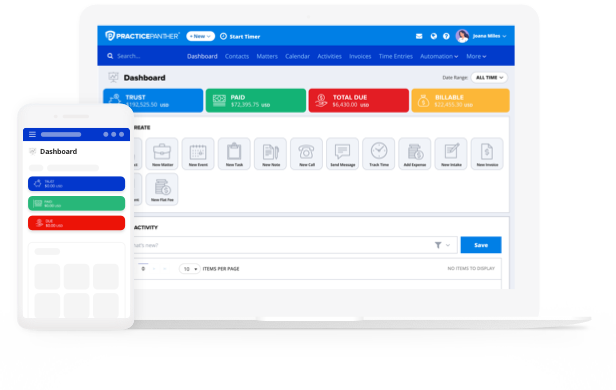
Some all-in-one solutions, like PracticePanther, offer analytics and reporting tools that help you spot gaps before they become problems.
And for added control over security or data residency, many solutions now support access through a cloud server—offering more flexibility without giving up mobility.
Ultimately, building your tech stack is not about layering on applications; it’s about harnessing a holistic system that supports how you work.
What Type of Computer Applications Do Most Law Firms Use?
Alongside legal-specific platforms, firms rely on the same systems most businesses do:
- Calendars
- File storage
- Document editing
- Communication apps for meetings and messaging
What matters is how these pieces fit together. If your billing software doesn’t talk to your calendar, or your CRM doesn’t connect to your matter management, then you’re spending time juggling systems that should be doing the heavy lifting for you.
That’s where a well-integrated tech stack makes a difference—especially when everything connects inside a cloud-based law practice management software platform.
When done right, software makes daily operations feel smoother.
New client signs on? The intake form feeds directly into their matter file.
Need to draft a standard agreement? A few clicks pull the client data and create the document automatically.
Running late on invoices? Automated reminders take care of the follow-up. That’s the difference between scattered systems and one that supports your practice.

How Can Law Firms Use Technology to Improve Productivity?
Technology helps law firms shift from reactive to proactive. You stop relying on memory or inboxes to track work and instead build systems that do it for you.
A 2025 ABA report found that firms using software for accounting and billing recovered between one and ten hours per attorney per month, while 12% of respondents reported saving over eleven hours. That time doesn’t come from working faster—it comes from removing tasks that never should’ve been manual in the first place.
The same report noted that nearly three-quarters of small to midsize firms are already using cloud platforms to run their operations. They’re automating repetitive tasks, generating client-ready documents with prebuilt templates, using analytics and reporting tools to monitor revenue and collections, and keeping all client communication in one secure location.
None of that happens in isolation. When your practice management software connects your time tracking, billing, documents, calendar, and email, you’re not working harder—you’re working with a system that makes things easier.
Tip: Want to learn more about legal practice management software? Check out our comprehensive guide.
Don’t Let Your Tech Hold You Back
PracticePanther was built to simplify the messy parts of running a law firm. We bring together case management, billing and accounting, document assembly, legal CRM, task management, and more, so you don’t have to wrestle with five different platforms.
If you’re ready for software that supports how your firm works, schedule a free demo and see how PracticePanther fits your team, your clients, and your day.