When you’re managing a heavy caseload, it leaves little room to think about what clients are experiencing from their side of the table. But the real key to strengthening retention is understanding each client’s priorities and preferences, as well as how they perceive their relationship with your practice.
That means client retention isn’t solely a marketing problem; it’s a case management problem.
Clients expect to feel informed throughout the process, and they expect their attorney to be organized, proactive, and reliable. If you can meet these expectations, at every touchpoint, you can improve client retention. It’s that simple.
The importance of client retention is tough to overstate, especially for smaller, high-volume practices, as client acquisition can cost up to 15 times as much as retaining an existing client.
If you’ve been exploring legal case management software as a way to enhance your own processes, this article will explain the key reasons behind client attrition and how to create the most reliable legal case management system possible for your firm.
Why Client Retention Starts With How You Manage Cases
You might think client retention is primarily a marketing problem; many attorneys do. But the more you consider what’s most important to legal clients (things like regular, proactive communication and following through on deadlines without exception), the easier it becomes to see the connection between your case management habits and processes and your ability to retain clients and grow your practice.
There are several aspects of legal case management that can directly impact client relationships and retention, like:
- Intake processes: Slow, disorganized processes create early doubt in a client’s mind around how their matter will be handled.
- Communication: Unpredictable communication tends to erode trust faster than an unfavorable outcome.
- Organization: Disorganized files often lead to the kind of preventable errors that clients will notice and remember.
- Deadlines: Missed deadlines can hurt cases and prevent clients from referring your practice to others.
- Follow-through: When you fail to do what you say you’ll do, it makes clients feel less valued and more like mere transactions.
Ultimately, a client who always knows what’s happening, gets documents and updates on time, and receives a clear explanation of each step in their matter is one who’s likely to refer others, leave positive reviews, and return for future legal needs.
Effective legal matter management, including how you track, organize, and move each case forward, has a direct impact on your ability to retain high-value clients, build a strong reputation, and grow your firm.

The Case Management Habits That Keep Clients Coming Back
While every attorney, client, and case is unique, there are several case management habits that consistently impact how easily you’re able to retain your best clients. It really doesn’t matter much whether you’re a small firm with heavy caseloads, a huge national firm, or somewhere in the middle; these best practices are universally important.
Keeping Every Matter Organized From Day One
You shouldn’t just be thinking about client retention as you’re wrapping up a particular case. Instead, you should adjust your mindset to view it as something that really begins at intake.
Every client, no matter how major or minor their case, expects their attorney to be highly organized and consistently professional; and they’re not afraid to take their case to another firm if they suspect that such is not the case.
Components of a Well-Organized Practice
- A consistent intake process that collects, maintains, and protects every detail of information about a given case.
- A centralized, accessible repository that keeps all case documents, notes, and correspondence organized in a single location.
- A clear system for naming and filing information, so nothing gets lost between the parties working on the case.
- Status tracking that shows where every open matter stands, at a glance.
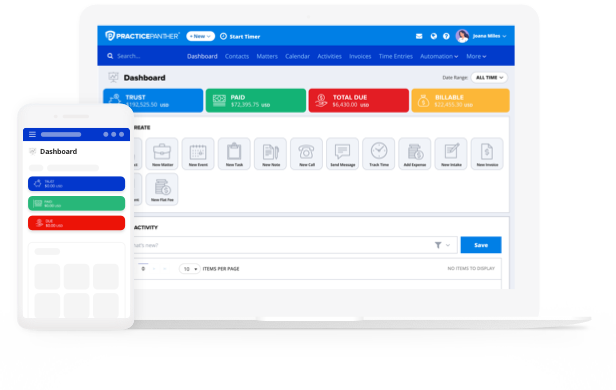
Clients can often tell when their attorney is disorganized or distracted, even before it can have an impact on their case’s outcome. This is why it’s so important to have an efficient, well-organized practice, one where no detail slips through the cracks. Legal case management solutions (like PracticePanther) can help you keep every matter organized from day one by offering a centralized system that brings together every aspect of your practice including legal billing, task management, and more.
Communicating Proactively, Not Just Reactively
One of the most common reasons a client might leave their attorney is a largely preventable one that’s not directly connected to your performance or results. It’s a lack of proactive communication.
This isn’t just opinion or based on gut feeling. In fact, the American Bar Association (ABA) points out that the top two complaints among unsatisfied clients, “neglect and lack of communication, often go hand in hand,” and can be mitigated with improved case management.
Keep in mind that for many of your clients, it’s their first time working with an attorney or navigating the system. They are often experiencing a great deal of stress, and when they don’t receive timely updates on their matter they’ll naturally assume the worst in many cases, even if there’s no other indication that anything is wrong.
What Proactive Communication Looks Like
- Setting and maintaining a default check-in cadence for each matter
- Sending brief updates at key milestones (when you make a filing or receive a response, for example)
- Communicating with clients through their preferred channel, consistently
- Never waiting for a client to follow-up on something you had promised
Strong communication used to simply be considered good client service; today, though, it’s a direct driver of retention and referrals. By implementing a case management solution like PracticePanther, you can build and automate key touchpoints that make proactive communication the standard and a potential differentiator for your firm.
Building a legal case management template for each matter type, one that defines your communication checkpoints from intake to close, is one of the most practical ways to make proactive outreach the default rather than the exception.
Following Through on Deadlines Without Exception
Within virtually any industry, the ability to meet deadlines plays a key role in client retention. The legal industry is no different. Whether you miss a major filing deadline or establish a pattern of minor misses or last-minute scrambling, clients will notice and quickly lose their confidence. You might be able to get the case over the finish line, but you’ve greatly reduced the chances of the client returning with future needs.
Increase Your Deadline Discipline
- Add deadlines to your calendar the moment they are created, not when you remember to add them
- Set advanced reminders for client outreach, so nothing surfaces at the last minute
- Clearly assign tasks to their owners, so crucial deadlines don’t fall through the cracks
- Review open matters on a regular, set schedule so clients are always aware of what’s going on, and what they can expect next
Your ability to set appropriate expectations and follow through on what you promise can significantly impact your reputation and ability to attract repeat business and referrals. If you find it difficult to keep track of deadlines and touchpoints, PracticePanther’s case management software can help.
Closing the Loop at Case End
Most small firms invest significant energy and resources into winning new clients, but don’t pay as much attention to what comes next. They work through entire cases, adhering to case management best practices related to organization, communication, and follow-through, but many times fail to close the loop when the case is over.
But that’s a missed opportunity in a couple of ways. First, a client who feels well taken care of at the end of a matter is far more likely to return. And when that happens, there’s also a good chance they’ll recommend you when someone they know needs an attorney.
How to Close the Loop
- Have a clear conversation with the client to summarize everything that has happened and let them know, in plain language, what they should expect next
- Collect and deliver any final documents the client might need for their own records
- Conduct a brief, genuine “check-in” to surface and address any questions or concerns the client has
- Encourage the client to consider working with you again if future legal needs arise
With a platform like PracticePanther, closing the loop effectively becomes much more manageable, especially for a smaller firm with a high case volume. And it’s something that not only keeps your current clients happy, but it will also help you to be top-of-mind next time they need legal services. PracticePanther lets you build user-friendly, customized workflows to ensure that the final steps of every case are handled with the same level of care and attention as the first.
What Breaks Down in High-Volume Small Firms and How to Fix It
The positive habits described so far aren’t particularly difficult to implement. The real challenge of small law firm case management is consistently applying these habits while juggling 50 or more open matters, client intake, billing, and correspondence simultaneously.
When breakdowns happen in smaller, high-volume practices, it’s rarely due to a lack of effort or misaligned intent. Instead, their cause is much more mundane (and preventable): the absence of a reliable case management system.
The more effective your case management system, the easier it becomes to retain your best clients. It prevents important details and key deadlines from slipping through the cracks, while making it easier to keep matters organized, communicate proactively, follow through on every deadline, and effectively close the loop at case end.
In other words, the best solution for small, high-volume firms isn’t logging more hours; it’s building a consistent process that works whether you have 10 open cases or 60. And the more you work with specific clients, they’ll notice your consistency and reliability, and won’t have to think twice about coming back to you in the future.

Building a Case Management Process That Supports Long-Term Client Relationships
The first step to building the type of case management process that enables you to increase retention is to identify points of friction in your current process. Be sure to consider your own perspective as well as that of your clients.
Use this self-assessment as a starting point:
- Do I have a consistent intake process for every matter type?
- Do clients hear from me at predictable intervals, without having to ask?
- Are all case documents and communications stored in one organized place?
- Does every deadline get tracked the moment it’s identified?
- Do I have a defined process for closing out matters and following up?
- Can I see the full status of every open matter without digging?
- Does my process hold up whether I have 10 or 60 open matters?
If you answer “no” to any of these questions, it most likely indicates a friction point that you’ll need to address. When a client experiences too many of these friction points over the course of their working relationship with you, they might consider going elsewhere with their next matter.
It comes down to one simple idea: the firms that retain their clients most effectively are the ones with efficient, friction-free processes that keep every matter on track. Again, the key isn’t working more hours; it’s ensuring that you can do your work without friction, without exception.
Where Do You Go From Here?
Managing a full caseload while delivering the type of experience that keeps clients happy isn’t easy. And yet strong client retention is rarely a product of simply working harder, or longer. Instead, it’s a product of the kind of consistency that comes with proven, repeatable processes.
Clients notice more than you might think. They notice when you have an organized intake, when you communicate proactively, when you track and meet every deadline, and when you close matters cleanly. And when clients notice these things consistently, they’re more likely to remain loyal and even recommend you to others.
If you’re looking for a way to put these habits into practice without adding to your administrative workload, PracticePanther is worth exploring. Start a free trial to see how it fits your current workflow, or schedule a demo to walk through it in the context of your practice.