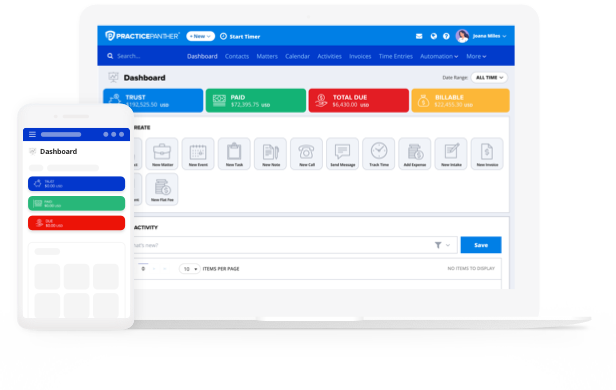
A direct line connects your law firm’s ability to efficiently and accurately process invoices and its overall profitability, especially for smaller firms with higher caseloads. If you’re not tracking your billable hours accurately and delivering invoices quickly, you risk straining client relationships, slowing collections, and limiting your firm’s ability to grow. And even a seemingly minor mistake or invoice discrepancy can lead to a range of consequences, including cash flow problems, compliance risks, and reduced client trust.
As firms of all sizes are realizing, the right legal billing software can have an outsized impact on your firm’s ability to increase revenue and pursue strategic growth. This article will outline some of the most common invoicing mistakes firms make (and how to avoid them!) while answering key questions such as: “How do firms automate billing for legal services, and what is the actual impact?”
Invoice Problems and Solutions (At a Glance)
An invoicing mistake is more than just an administrative issue. Especially as they accumulate over time, each mistake or invoice discrepancy presents a new risk to your ability to gain clients’ trust, close cases, and grow the firm.
- Revenue: As law firms’ direct expenses and technology spending continue to rise, they have to do everything in their power to maximize revenue without risking client relationships by simply raising their rates. Instead, you have to remain vigilant against revenue leakage related to common invoicing problems like untracked billable time, unrecorded expenses, and other problems that come with a reliance on inefficient, manual workflows.
- With more streamlined invoicing and law firm billing practices (like the development of legal invoice templates and automated legal billing software), you can address revenue leakage, protect billable revenue, and set your firm up for growth.
- Ethical Compliance: A few of the ethical compliance risks associated with common invoicing mistakes include ethically dubious practices like double billing, block billing, trust account mismanagement, and passing administrative or overhead costs along to clients.
- These practices expose your firm to malpractice claims, bar association discipline or sanctions, reputational damage, and reduced revenue. You can instead leverage a case management platform like PracticePanther to reduce non-billable hours through more above-board methods.
- Client Satisfaction: In the legal industry, there is a direct relationship between client satisfaction and revenue. Especially for clients who haven’t worked with law firms before, there can be a lot of anxiety about how much legal services are going to cost, as well as how they’re invoiced.
- Clients require transparency, as they want to know what the legal fees they pay are actually getting them. Even the most minor invoice discrepancy can quickly frustrate clients and erode trust, ultimately reducing the firm’s revenue. Instead, build real relationships through trust, transparency, and results.
- Reputation: Revenue leakage and client attrition are phrases no law firm wants to hear or discuss, but they describe exactly what awaits firms that demonstrate a pattern of invoicing mistakes.
- While plenty of clients might overlook a minor invoice discrepancy or two if it seems innocent or explainable, once you gain a reputation for invoicing and billing mistakes, it becomes increasingly difficult to retain existing clients, win new ones, and grow your firm.
- Cash Flow Stability: Cash flow stability ensures that operating costs will be covered, while avoiding unnecessary debt from credit lines. Cash flow stability makes it easier to meet day-to-day obligations, avoid high-interest debt, and operate effectively through times of change or revenue fluctuation.
Ultimately, invoicing mistakes that result in delayed payments, client disputes, or write-offs can lead to significant revenue leakage and hinder growth. This underscores the importance of careful invoicing and adopting a legal case management platform that includes custom invoice templates, one-click invoice generation, read notifications, and other helpful features.

The 5 Most Common Invoicing Mistakes (And How to Prevent Them)
Mistake #1: Time Tracking Errors
Time tracking errors occur whenever billable hours are logged inaccurately, inconsistently, or not at all, and result in direct revenue loss.
Why Time Tracking Errors Happen
For firms that handle high caseloads, time tracking isn’t always a top priority, but it should be. Time tracking errors can result in issues like vague billing descriptions or inconsistent billing increments, which can frustrate clients and compromise trust.
For example, when you wait until the end of the day (or week) to document billable hours and create invoices (which is not an uncommon practice), you risk losing 10-15% of your billable time, resulting in diminished revenue.
Consequences of Time Tracking Errors
The most serious consequence of time tracking errors is revenue loss, though errors also impact the firm’s professional reputation, and can lead to client attrition.
When time tracking errors go unnoticed, you risk being paid less than you deserve. And when they are noticed, they can lead to client disputes, an erosion of trust, and revenue loss. In this scenario, you then have to spend additional resources defending invoices during fee disputes or audits, time that would be better spent on billable work.
How to Prevent Time Tracking Errors
The best solution to time tracking errors is prevention. Rather than delaying the processes of invoicing and billing, it’s more advantageous to capture time as it happens. While this can be done manually (using a combination of spreadsheets and timers, for example), this approach can be time consuming and susceptible to human error.
Rather than reconstructing time entries manually, it’s better to update and modernize your processes with time and expense tracking software or a case management solution that either contains those features or integrates with solutions that do. PracticePanther’s platform makes it easy to track time and expenses with automated task management, customizable invoice templates, and robust reporting features.
Mistake #2: Double Billing
Double billing is when a client is charged multiple times for the same work. That could mean charging two clients for the same block of time, billing overlapping tasks, or improperly billing multiple attorneys’ time for collaborative work.
Why Double Billing Happens
An important thing lawyers need to know about double billing is that while it’s not unheard of for an attorney to intentionally engage in double billing, such a practice does constitute serious fraud. All too often, though, firms wind up double billing by accident, due to time tracking or system errors, duplicated entries, or disorganized billing workflows.
For smaller firms with higher caseloads, billing data quickly becomes difficult to track, especially when time tracking and billing processes require separate, disconnected systems and result in poor visibility across matters.
Consequences of Double Billing
From the client’s perspective, it doesn’t really matter whether double billing is an innocent error or committed purposefully, as the results are largely the same: client disputes, reputational harm, and the potential for lost billing hours.
The consequences often extend beyond a single invoice dispute or payment delay, as serious cases can lead to malpractice claims and even bar association discipline. These potential outcomes illustrate why centralized time tracking, clear internal billing policies, and software that helps to ensure accurate, timely invoicing and collection are well worth the effort.
How to Prevent Double Billing
Prevention of double billing scenarios involves centralizing your time tracking system, to ensure that all entries are visible, well-organized. and auditable.
The best ways to ensure accurate time tracking and billing include regular billing audits and conflict checks, clearly defined billing policies, and the use of software like PracticePanther that lets you automate, delegate, and accelerate task management.
Mistake #3: Block Billing
Block billing describes the practice of combining multiple tasks into a single time entry, rather than logging and billing them individually. For example, rather than logging them as separate, time-tracked entries, you might instead take a shortcut by combining those tasks into a single entry with a broad label like case development or administrative work.
Why Block Billing Happens
Block billing often occurs in firms that treat time tracking more like an afterthought than the important, revenue-impacting task it should be treated as. It can also happen when attorneys feel like they’re in a time crunch and under pressure to increase their efficiency in moving matters forward.
While recording a time tracking entry like “Draft motion, review emails, client call (5.5 hours)” seems like a natural time-saver, however, it actually risks creating significant problems for clients, firms, and courts.
Consequences of Block Billing
The most obvious consequence of block billing is that clients aren’t able to see a transparent account of the services they’ve received and how they have been billed. This quickly erodes trust, increases the chance of invoice disputes, and risks harming client relationships.
Block billing also comes with professional consequences that come with. Courts might reject fee petitions, for example, when there is insufficient transparency in how services have been rendered and billed. Over time, repeated instances of block billing can lead to increased write-offs, reduced collections or insurance payouts, and regulatory compliance issues.
How to Prevent Block Billing
Block billing is another largely preventable issue, provided that you commit to clear and specific billing policies, real-time capturing of billable work hours, and the development of invoice templates to standardize billing and increase transparency.
Mistake #4: Trust Accounting Compliance Failures
Trust account compliance refers to the strict, legally mandated process of managing, documenting, and protecting client funds (like retainers or settlements) by keeping them separate from your firm’s operating funds.
When firms fail to adhere to proper trust accounting principles, they risk a wide range of consequences, including potential disciplinary actions or disbarment.
Why Trust Accounting Compliance Failures Happen
Many trust accounting compliance failures occur when firms don’t have clear, documented workflows for managing the movement of client funds. Instead, they count on outdated, manual record-keeping processes that are often time-consuming and susceptible to error.
There are a few different contributing factors behind most trust accounting compliance failures. They include billing directly from a trust without proper transfer, failing to reconcile trust accounts, misallocating client funds, and not documenting earned vs. unearned fees.
Consequences of Trust Accounting Compliance Failures
Firms have an ethical obligation to abide by trust accounting principles, and can face serious consequences for their failures on this front, including:
- Client Disputes and Financial Liability: When funds are either misallocated or improperly transferred, you expose yourself to legal claims and financial liability that can be costly and difficult to resolve.
- Discipline and Sanctions: State bar associations take trust account violations seriously, enforcing trust accounting principles through formal disciplinary proceedings, financial penalties, and sanctions.
- License Suspension and Disbarment: Serious cases, or cases where an attorney has demonstrated a pattern of trust accounting compliance failures face the most serious penalties, potentially risking losing their license to practice.
How to Prevent Trust Accounting Compliance Failures
Trust accounting compliance starts by creating a strict separation between trust and operating accounts, and maintaining that distinction with clear, documented workflows and regular internal audits to proactively catch and mitigate any discrepancies or potential violations.
By adhering to trust accounting compliance best practices like detailed record-keeping and three-way reconciliation between bank statements, trust ledgers, and individual client balances, your firm can continue to generate and grow revenue while avoiding the consequences of mismanagement.
PracticePanther includes everything you need to manage your firm’s legal trust accounting with ease. Among its many features, PracticePanther provides three-way reconciliation to ensure that trust ledgers, bank statements, and individual client balances are consistently aligned and that your firm maintains an audit-ready position.
Mistake #5: Invoice Delays
Compared with some of the other invoicing mistakes described above, delayed invoicing is a pretty straightforward error to make. It’s also relatively easy to prevent, through clear workflows, accurate time tracking, and legal billing and payments software that automates your invoicing and billing processes.
Why Invoice Delays Happen
When firms fall behind on invoicing, it’s often because they have gotten into the habit of treating billing as an end-of-week or end-of-month task rather than an ongoing process that tracks time in real-time.
This non-ideal approach often requires attorneys to reconstruct time entries after the fact, which is time consuming in itself and prone to human error since it’s a manual process. Inefficiencies quickly become bottlenecks, creating frustrating delays and reducing the trust and transparency required for productive, long-term client relationships.
Consequences of Invoice Delays
The most immediate consequence of delayed invoicing is delayed payments, which impacts cash flow stability. Accurate, detailed, and timely invoices, by contrast, increase transparency and trust, and improve client relationships.
How to Prevent Invoice Delays
The key to preventing invoicing delays is to a proactive, systematic approach to time tracking and invoicing. For example, you can use PracticePanther’s legal billing software to set up recurring billing schedules, automate invoice generation, and send invoices promptly once work is completed.
How to Improve Your Law Firm’s Invoicing Process
If you’re able to avoid the invoicing mistakes described above, you’re well on your way to a more efficient, accurate, and effective approach to time tracking, billing, and invoicing. To take the next step, consider the following action items you can implement today.
Action Item #1: Standardize Your Billing Policies
One of the best ways to prevent common legal invoicing mistakes is to establish and adhere to clear internal billing guidelines. This makes it easier to set clear expectations for attorneys and staff that address matters like billing increments, description standards, and invoice review procedures. Following a common playbook greatly reduces the potential for errors and inefficiencies.
Action Item #2: Automate Wherever Possible
No matter how careful or thorough you are, manual billing processes are always susceptible to human error, which can cause payment delays and impact your firm’s cash flow stability. Seek out case management software that enables you to automate routine tasks like time capture, recurring billing cycles, payment reminders, and online payment collection. Each of these items removes friction from the collection process, helping your firm to get paid faster. For example, PracticePanther’s MoneyFinder report empowers attorneys to quickly and easily uncover any overlooked billable hours with just one simple click.
Action Item #3: Conduct Monthly Billing Reviews
You should be setting time aside on a monthly basis to spot-check time entries and invoices, review write-offs, and monitor collection rates. The more consistently you conduct these reviews, the easier it becomes to catch invoicing mistakes in a timely manner, before they can impact your cash flow or client relationships.
Action Item #4: Improve Client Transparency
When your firm increases transparency, it’s able to foster more productive, mutually-beneficial relationships with clients. You can increase transparency by formatting invoices clearly and including detailed task descriptions and price breakdowns. Small- and mid-size firms with high volume benefit from the use of software that enables them to create and customize legal invoice templates that establish a standardized, reusable format for easier, more efficient billing.
Action Item #5: Use Legal-Specific Billing Software
While you technically could use a general-purpose billing software for your firm, it’s not an ideal solution. Using one of these programs can lead to inaccuracies and inefficiencies since they aren’t designed for the unique needs of a legal firm. For example, general billing platforms aren’t built to handle trust accounting principles, and many only offer manual time tracking.
By contrast, a comprehensive, law firm billing platform like PracticePanther provides the features firms need to produce accurate invoices and maintain compliance, including automated time tracking and invoicing, trust accounting workflows, customizable reporting dashboards, and so much more.

Avoid Invoicing Mistakes and Get Paid Faster, with PracticePanther
While it may be true that “to err is human,” most of the most common invoicing mistakes are preventable with the right systems in place. Modern legal billing software solutions help firms to establish standardized policies, procedures, and templates, as well as automated time tracking and other powerful features.
Is there room for improvement in your current billing processes? To see how PracticePanther’s legal billing software can help your firm eliminate costly invoicing mistakes and get paid faster, schedule a free demo or sign up for a trial today.